Stain over a dirty, mildewed or damp fence fails the same way every time: it flakes, it blotches, or it wears through in a season. The fix is boring and it happens before the first drop goes on.
1. Clean it — gently
Wood gets washed with a surface-safe cleaner, not blasted with high pressure. Pressure that's fine on concrete will fuzz the grain on cedar and pine and drive water into the joints. The goal is to lift dirt, pollen and mildew out of the surface without tearing it up.
2. Brighten what went gray
Cleaning raises the wood's pH and leaves it looking flat. A brightener (oxalic-acid based is the common one) resets that, brings back the warm tone, and gives the stain a consistent surface to bond to. Gray, weathered fibers don't hold pigment the way sound wood does.
3. Let it dry — actually dry
This is the step people skip. Wood has to dry back down before it's sealed; staining damp wood traps moisture underneath, and that's where peeling and mildew start. In a Texas summer that's often 48–72 hours after washing, longer in shade or after rain. We check moisture rather than guessing.
4. Protect everything else
- Plants watered and covered, then rinsed when we're done
- Pavers, patios and driveways covered where overspray could land
- Hardware, lights and house paint masked or cut in carefully
5. Apply evenly
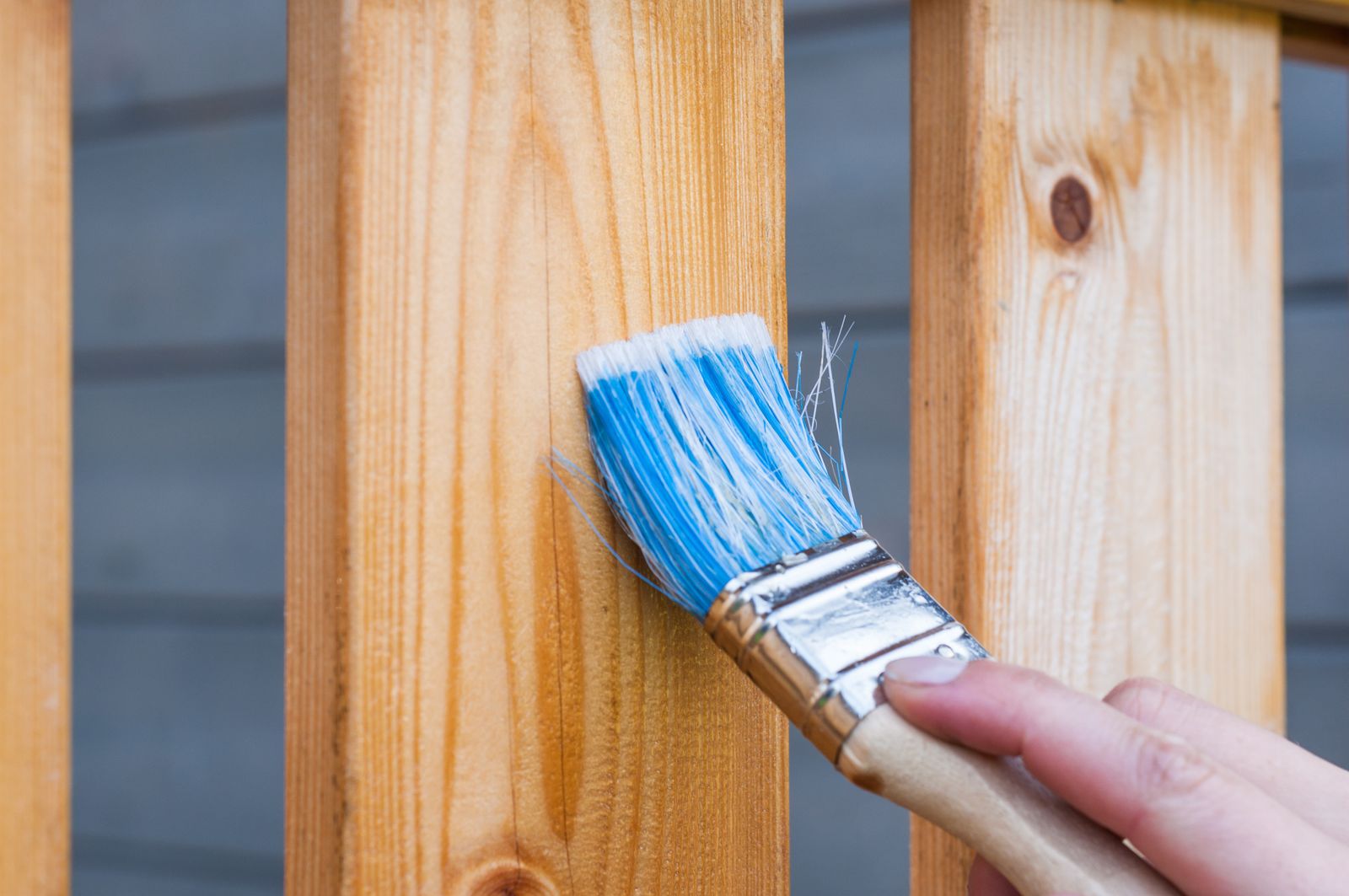
Penetrating stain goes on in even passes and gets back-brushed so it soaks in without puddles. Corners, tops of rails and both sides of boards are where shortcuts show up first — and where the wood fails first if they're missed.
Done in that order, a fence finish does what it's supposed to: sheds water, blocks UV, and holds its color. Done out of order, you pay for the same job twice.
Want it done right the first time? We clean, brighten, dry and seal fences and decks across Bell County.