Walk the paint aisle and every can looks similar. Underneath, exterior wood finishes split into two families, and on a fence in Central Texas the difference decides whether you're re-coating in two years or five.
Penetrating stains soak in
A penetrating stain carries its pigment into the wood fibers instead of sitting on top of them. There is no film to crack, blister or peel, because there is no film. The color looks like wood rather than paint, the grain still reads, and the surface stays breathable — which matters when a fence is baking at 140°F one week and soaking wet the next.
Maintenance is also simpler. When water stops beading, you clean the surface and recoat. No scraping, no sanding back a failed film.
Film-forming finishes sit on top
Acrylic and latex stains lay a coating over the wood. That can give you a more uniform, paint-like look, and it's a reasonable choice on vertical surfaces that stay out of the worst sun. But film finishes are the ones that peel — and on horizontal rails and west-facing boards, that's exactly where you'll see it first. Once a film fails, the repair is stripping and starting over.
What matters more than the brand
- Prep. Wood that's still dirty, mildewed or damp will reject the finish or trap moisture under it.
- Moisture. Sealing wood before it's dry is the single most common reason a finish fails early.
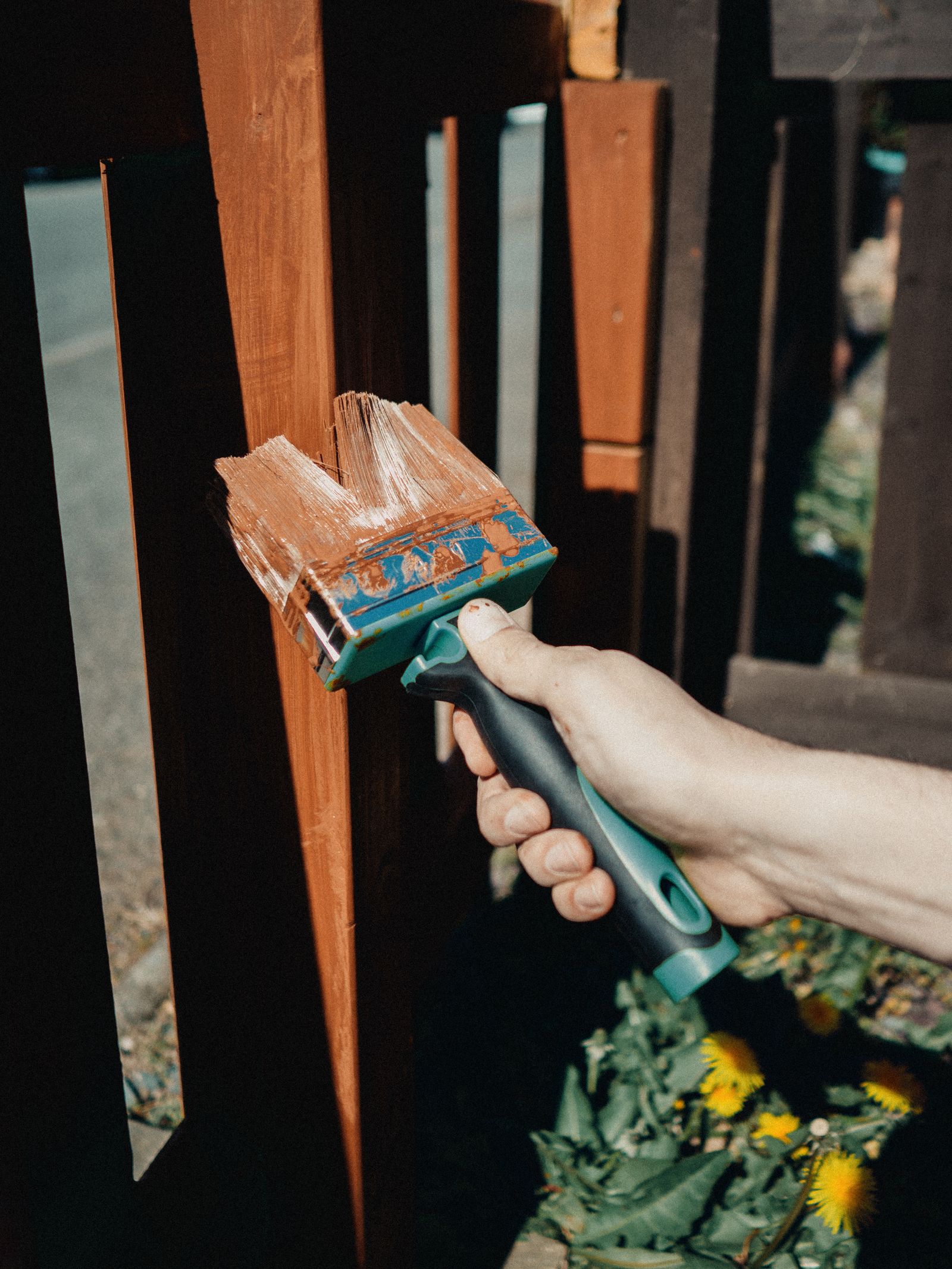
- Even application. Puddles and lap marks dry into visible blotches; back-brushing evens them out.
We use penetrating stains as the default for fences and decks — professional lines like Ready Seal, Seal-Once, Cabot or Sherwin-Williams SuperDeck — and match the exact product to the wood and the color you want.
Want it done right the first time? We clean, brighten, dry and seal fences and decks across Bell County.